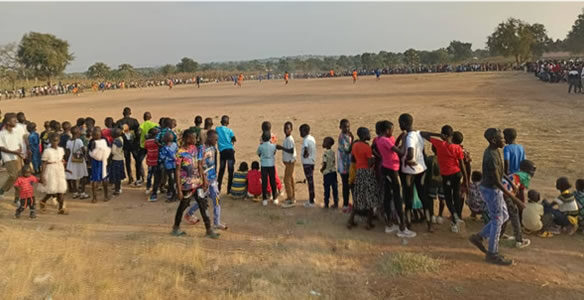
Youth sporting peace innitiatives
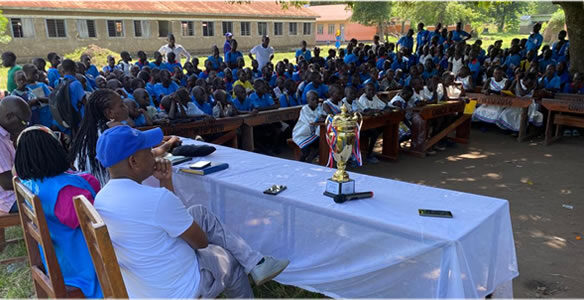
Inschool debate
About
Women, Children and Youth Initiative
WCAYI is a women-led, non-profit-making CBO serving refugee and host communities. WCAYI exists to protect, empower, and amplify the voices of women, children, and youth affected by displacement, vulnerability, and crisis.
Rooted in the community and led by local actors, WCAYI responds to protection risks, social exclusion, and structural inequalities through people-centered, rights-based, and community-driven approaches.
Our Vision
A peaceful, inclusive, and empowered community where women, children, and youth live free from violence, enjoy equal opportunities ,and actively contribute to sustainable development.
Our Mission
To promote the rights, protection, and empowerment of women, children, and youth through advocacy, capacity building, service delivery,and community-driven initiatives that foster peace, resilience, and
social cohesion.
Our Core Values & Guiding Principles
- Inclusivity & Equity
WCAYI is committed to creating environments where everyone is welcomed, respected, and valued, regardless of gender, age, disability, nationality, religion, or socioeconomic background.
- Inclusivity removes barriers to participation
- Equity ensures fair access by providing support based on individual needs
Why it matters:
- Promotes fair access to education, healthcare, livelihoods, and services.
- Reduces discrimination and bias
- Strengthens social trust and cohesion
- Encourages diverse perspectives and innovation.
How we promote it:
- Inclusive, anti-discrimination policies
- Participation of underrepresented voices
- Targeted support instead of one-size-fits-all solutions
- Community education on respect and cultural awareness
2. Participation and community ownership:
This core value guides the work of the Women, Children and Youth Initiative (WCAYI) in Palorinya Refugee Settlement, Obongi District. WCYI is committed to ensuring that women, children, and youth are not passive recipients of assistance but active partners in the design, implementation, monitoring, and evaluation of all interventions.
WCAYI actively engages beneficiaries, families, community leaders, and grassroots structures to identify priorities, assess needs, and co-create solutions that respond to the real protection and development challenges faced by women, children, and youth. Special efforts are made to include women-led households, adolescent girls, boys, persons with disabilities, and other vulnerable groups, ensuring their voices are heard and respected.
Through inclusive participation, WCAYI ensures strengthened community ownership, empowering communities to take responsibility for protecting their members, sustaining project outcomes, and promoting positive social norms. Community-led committees, youth and women’s groups, and child-friendly forums will be supported to lead activities, monitor protection concerns, and provide feedback through transparent complaint and response mechanisms.
By fostering meaningful participation and ownership, WCAYI enhances accountability, builds local capacity, and promotes dignity, resilience, and self-reliance among women, children, and youth in Palorinya Refugee Settlement and surrounding host communities
3. Compassion and respect:
As foundational core values guiding the work of the Women, Children and Youth Initiative WCAYI is committed to upholding the dignity, worth, and rights of every individual, regardless of age, gender, disability, nationality, or background.
All WCAYI interventions are delivered with empathy, cultural sensitivity, and non-discrimination, recognizing the unique experiences, vulnerabilities, and strengths of women, children, and youth affected by displacement. Staff, volunteers, and community leaders will be trained to engage respectfully, listen actively, and respond in ways that promote safety, trust, and healing.
WCAYI strengthens the already safe, inclusive, and child-friendly spaces where women, children, and youth feel valued, heard, and protected. Survivors of abuse, neglect, or exploitation are treated with confidentiality, sensitivity, and care, and referred to appropriate support services in line with safeguarding and protection standards.
By embedding compassion and respect in all actions, WCAYI fosters positive relationships, social cohesion, and a sense of belonging within Palorinya Refugee Settlement and surrounding host communities, ensuring that assistance is not only effective but also humane and dignified.
4. Learning and adaptability:
WCAYI is committed to continuously improving the quality, relevance, and effectiveness of its interventions for women, children, and youth through systematic learning and responsive programming.
WCAYI implements regular monitoring and evaluation (M&E) processes to track progress, measure outcomes, and identify protection gaps and emerging needs. Data will be collected ethically and in age- and gender-sensitive ways, ensuring the safety and participation of women, children, and youth.
The initiative actively promotes feedback and learning mechanisms, including community consultations, reflection meetings, and accessible complaint and
feedback systems, allowing beneficiaries to share experiences, concerns, and suggestions.Feedback from women, children, and youth will be analyzed and used to inform timely adjustments to activities and strategies.
WCAYI fosters a culture of continuous learning and adaptability, encouraging staff, volunteers, and community leaders to reflect on lessons learned, share best practices, and adapt approaches to changing contexts and community priorities. By embracing learning and adaptability, WCAYI ensures that its programs remain responsive, accountable, and impactful for women, children, and youth in Palorinya Refugee Settlement and surrounding host communities.
5. Transparency and accountability:
As a fundamental core value, It guides the work of the Women, Children and Youth Initiative (WCAYI) in Palorinya Refugee Settlement, Obongi District. WCAYI is committed to open, ethical, and inclusive governance, ensuring that women, children, and youth are protected, informed, and able to trust the systems that serve them.
WCAYI aims at promoting a clear communication and reporting on project objectives, activities, selection criteria, budgets (where appropriate), and results, using accessible and child-friendly methods that communities can understand. Information shall be shared openly with beneficiaries, community leaders, and stakeholders to reduce misinformation, prevent exploitation, and build confidence in program processes.
To ensure responsible resource management, WCAYI applies strong financial controls, transparent procurement procedures, and regular monitoring of resource use. Community-based oversight mechanisms,
including women’s and youth representatives, will be supported to monitor service delivery and resource utilization.
WCAYI aims at strengthening accountability to affected populations through safe, confidential, and responsive complaint and feedback mechanisms, enabling women, children, and youth to report concerns, misconduct, or service gaps without fear of retaliation. Feedback will be documented, addressed promptly, and used to improve program quality.
By upholding transparency and accountability, WCAYI reinforces dignity, safeguards rights, prevents abuse and corruption, and ensures that interventions genuinely respond to the needs and priorities of women, children, and youth in Palorinya Refugee Settlement and surrounding host communities.
Remain responsive, accountable, and impactful for women, children, and youth in Palorinya Refugee Settlement and surrounding host communities.
Our Interventions
WCAYI operates primarily in Palorinya Refugee Settlement and surrounding host communities in Obongi District, West Nile region.
Our work responds to the needs of both refugees and host populations, promoting social cohesion, protection, and peaceful coexistence.